
Home / Services / Drainage Solutions
Drainage Solutions
Standing water and seasonal heaving often precede foundation damage. We design custom French drain and surface drainage systems to move water away for good.
The Problem
Standing Water Is a Foundation Problem Waiting to Happen
Drainage work is typically needed when standing water collects around a property. Pooling water in a yard, driveway, or roadway is a safety hazard and can cause excessive seasonal foundation movement, including heaving. If your foundation heaves, it may be necessary to install a surface drain, a French drain, or a combination of both — we'll develop a solution customized to your home.
Signs You Need a Drainage Solution
Pooling water is more than an inconvenience — it’s a safety hazard and a common driver of seasonal foundation movement. Watch for:
- Standing water around your home that doesn't drain
- Pooling water in the yard, driveway, or roadway
- Excessive seasonal foundation movement, including heaving
- Uneven or sloping floors after wet weather
If your foundation heaves seasonally, a free inspection can determine whether a surface drain, French drain, or a combination of both is the right fix.
Why It Happens
Water, Drainage & Expansive Clay Soil
Foundation settlement is generally caused by movement within the soil a foundation rests on, and that movement can come from several directions at once: drought conditions, periods of heavy rainfall, consolidation of poorly compacted backfill, decay of materials in the soil, drainage issues, tree roots, plumbing leaks, and erosion. Texas’s expansive clay soil makes water the biggest factor of all — it can swell by as much as 10% when saturated and shrink back down as it dries, and that cycle is what drives the seasonal heaving that shows up when water isn’t routed away from a home properly.
How It Works
What Happens After You Call
Every drainage project starts with a free, no-pressure inspection of how water moves across your property.
Request an Inspection
Call or submit a quick form and tell us where water is pooling around your property.
Meet With a Specialist
A certified technician visits your property, examines the grading and drainage, and walks you through what they find.
Review Findings & Options
You get a clear explanation of the cause and the drainage options available, with no pressure to decide on the spot.
Repair Options
What to Expect From a Drainage Installation
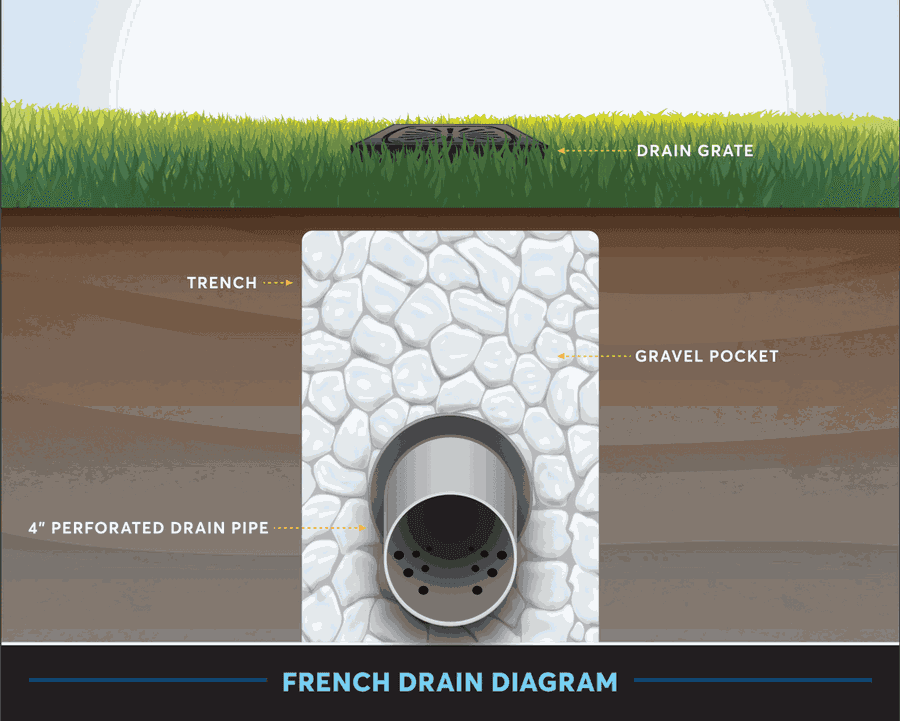
Washed gravel wrapped in filter fabric fills the trench, letting water pass through while keeping soil out so the drain keeps working year after year.
A perforated drain pipe at the base of the trench collects standing water and channels it safely away from the yard and the foundation.
Routing water away from the foundation edge prevents the pooling and excessive seasonal heaving that untreated standing water can cause.
Depending on your property, we may recommend a surface drain, a French drain, or a combination of both — customized to your home.
See Real Drainage Installs
Browse before-and-after photos from real drainage solution projects.
View Project GalleryWarranty & Financing
Ask your technician which warranty applies to your drainage installation, and ask about financing.
See Warranties & FinancingCommon Questions
Drainage Solutions FAQ
A properly installed French drain is built to last, but no drainage system is a substitute for overall foundation and grading maintenance. Keeping gutters clear, grading soil away from the foundation, and watering evenly during dry spells all help a drainage system keep doing its job over the long run.
A surface drain collects water that’s pooling on top of the ground, while a French drain uses a buried, gravel-filled trench with a perforated pipe to intercept water below the surface. Many properties benefit from a combination of both, which your technician will recommend based on how water is actually moving across your yard.
Yes — a trench is required to install the gravel and pipe. Your technician will walk you through where the trench will run and what to expect for your landscaping before work begins.
Warranty coverage depends on the specific work performed. Ask your technician which warranty applies to your project, and see our Warranties & Financing page for our full coverage details.
Do We Serve Your Area?
We serve 70+ cities across North Texas, San Antonio, and Waco.
View Service AreasSee What Customers Say
Read reviews from homeowners we’ve helped with drainage solutions.
Read Customer ReviewsSchedule Free Inspection
Tell us where water is collecting and a member of our team will reach out to schedule your free, no-obligation inspection.